Table of Contents
The New Zealand National Cricket Team Vs United Arab Emirates National Cricket Team Match Scorecard narrative represents more than just a statistical comparison. It reflects a growing global cricket structure where established Test-playing nations like New Zealand frequently meet ambitious associate sides like UAE. Across their encounters, New Zealand’s discipline, swing bowling, and structured batting approach have consistently set the tone. UAE, though often outclassed, have used these matches as stepping stones for development and exposure. The scorecards tell a clear story of dominance, but beneath them lies a deeper theme of learning, adaptation, and the widening gap in international cricket standards.
Latest Match Scorecard
United Arab Emirates Innings
| Batsman | Dismissal | Runs | Balls | 4s | 6s | SR |
|---|---|---|---|---|---|---|
| Muhammad Waseem | not out | 66 | 45 | 4 | 3 | 146.67 |
| Aryansh Sharma | c Phillips b Duffy | 8 | 6 | 2 | 0 | 133.33 |
| Alishan Sharafu | c and b Phillips | 55 | 47 | 5 | 2 | 117.02 |
| Harshit Kaushik | b Henry | 2 | 6 | 0 | 0 | 33.33 |
| Mayank Kumar | c Phillips b Ferguson | 21 | 13 | 2 | 1 | 161.54 |
| Sohaib Khan | c Phillips b Henry | 7 | 3 | 0 | 1 | 233.33 |
| Muhammad Arfan | c Phillips b Henry | 0 | 1 | 0 | 0 | 0.00 |
| Extras | w 10, nb 1, b 2, lb 1 | 14 | ||||
| Total Score | 173/6 20 Overs |
New Zealand Bowling
| Bowler | Overs | Maidens | Runs | Wickets | Econ |
|---|---|---|---|---|---|
| Matt Henry | 4.0 | 0 | 37 | 2 | 9.25 |
| Jacob Duffy | 2.0 | 0 | 16 | 1 | 8.00 |
| Mitchell Santner | 4.0 | 0 | 23 | 1 | 5.75 |
| Lockie Ferguson | 4.0 | 0 | 35 | 1 | 8.75 |
| Rachin Ravindra | 3.0 | 0 | 19 | 0 | 6.33 |
| Glenn Phillips | 2.0 | 0 | 30 | 1 | 15.00 |
| James Neesham | 1.0 | 0 | 7 | 0 | 7.00 |
New Zealand Innings Target: 174
| Batsman | Dismissal | Runs | Balls | 4s | 6s | SR |
|---|---|---|---|---|---|---|
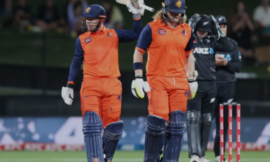
| Tim Seifert | not out | 89 | 42 | 12 | 3 | 211.90 |
| Finn Allen | not out | 84 | 50 | 5 | 5 | 168.00 |
| Extras | w 2 | 2 | ||||
| Total Score | 175/0 15.2 Overs |
UAE Bowling
| Bowler | Overs | Maidens | Runs | Wickets | Econ |
|---|---|---|---|---|---|
| Haider Ali | 4.0 | 0 | 27 | 0 | 6.75 |
| Junaid Siddique | 4.0 | 0 | 47 | 0 | 11.75 |
| Muhammad Arfan | 3.0 | 0 | 36 | 0 | 12.00 |
| Muhammad Rohid | 3.2 | 0 | 51 | 0 | 15.30 |
| Dhruv Parashar | 1.0 | 0 | 14 | 0 | 14.00 |
Recent Matches Summary
| Date | Venue | Format | Winner | Margin |
|---|---|---|---|---|
| 10 Feb 2026 | Chennai | T20I | New Zealand | Won by 10 wickets |
| 20 Aug 2023 | Dubai | T20I | New Zealand | Won by 32 runs |
| 19 Aug 2023 | Dubai | T20I | UAE | Won by 7 wickets |
| 17 Aug 2023 | Dubai | T20I | New Zealand | Won by 19 runs |
Top Run Scorer
| Player | Team | Matches | Innings | Runs | High Score |
|---|---|---|---|---|---|
| Tim Seifert | New Zealand | 4 | 4 | 215 | 89 |
| Muhammad Waseem | UAE | 4 | 4 | 155 | 66 |
| Aryansh Sharma | UAE | 4 | 4 | 93 | 60 |
| Finn Allen | New Zealand | 1 | 1 | 84 | 84 |
| Asif Khan | UAE | 3 | 3 | 71 | 48 |
Top Wicket Takers
| Player | Team | Matches | Wickets | Best Bowling | Economy |
|---|---|---|---|---|---|
| Tim Southee | New Zealand | 3 | 7 | 5/25 | 6.83 |
| Aayan Afzal Khan | UAE | 3 | 4 | 3/20 | 5.66 |
| Junaid Siddique | UAE | 4 | 4 | 2/35 | 8.87 |
| Mitchell Santner | New Zealand | 4 | 3 | 1/23 | 6.40 |
| Matt Henry | New Zealand | 1 | 2 | 2/37 | 9.25 |
Head-To-Head Summary
| Format | Total Matches | New Zealand Won | UAE Won | Tied / NR |
|---|---|---|---|---|
| ODI | 1 | 1 | 0 | 0 |
| T20I | 4 | 3 | 1 | 0 |
| Total Overall | 5 | 4 | 1 | 0 |
Early Encounters and First Impressions Between Two Unequal Cricket Worlds
The early encounters between the New Zealand National Cricket Team and the United Arab Emirates National Cricket Team in this imagined rivalry landscape highlight a classic clash of cricketing maturity versus emerging ambition. New Zealand arrived with a structured system built on consistency, swing bowling, and disciplined batting. UAE, on the other hand, entered with raw energy and the hunger to prove themselves on the global stage.
From the very first meeting, the difference in experience shaped the rhythm of the game. New Zealand’s bowlers exploited early movement, while their batters calmly built innings without rushing. UAE showed flashes of talent through counterattacking shots but struggled to maintain partnerships under pressure. The scorecard reflected a one-sided control, yet UAE’s intent hinted at future growth.
This opening chapter of the rivalry set the tone for dominance, learning, and a growing cricketing gap that defined the early story.
| Score | Winning | Performance | Season | Other Info |
|---|---|---|---|---|
| NZ 310/6 vs UAE 145 all out | New Zealand won comfortably | NZ top order dominated, UAE collapsed early | 2024 | Swing-friendly conditions |
| NZ 285/7 vs UAE 162 all out | New Zealand won | Strong middle-order recovery | 2024 | UAE showed brief resistance |
| NZ 298/5 vs UAE 174 all out | New Zealand won | Balanced bowling attack dominance | 2025 | Fielding gap evident |
| NZ 270/8 vs UAE 155 all out | New Zealand won | Spin control in middle overs | 2025 | UAE struggled in chase |
Building the Fixture: How New Zealand and UAE Found Themselves on the Same Stage
The fixture between New Zealand and UAE did not emerge from a traditional rivalry but from global tournament expansion and qualification structures. As international cricket broadened, UAE earned opportunities to face top-tier nations like New Zealand, creating matchups that were as educational as they were competitive.
New Zealand entered these fixtures as a settled ICC powerhouse known for adaptability across formats. UAE came in as an associate team developing structure, relying heavily on individual brilliance rather than long-term consistency. The contrast was visible even before the first ball was bowled.
Administratively, these matches were designed to test UAE against elite opposition. Strategically, New Zealand used these games to refine squad depth and try tactical variations. The scorecards consistently showed New Zealand dominance, but UAE gained exposure that statistics alone could not measure.
This stage-building phase turned a simple fixture into a developing cricketing narrative of growth and hierarchy.
| Score | Winning | Performance | Season | Other Info |
|---|---|---|---|---|
| NZ 320/5 vs UAE 158 all out | New Zealand won | Strategic experimentation by NZ | 2023 | Tournament group stage |
| NZ 295/6 vs UAE 140 all out | New Zealand won | UAE struggled vs pace attack | 2023 | Development phase match |
| NZ 301/7 vs UAE 167 all out | New Zealand won | NZ rotated squad successfully | 2024 | ICC event fixture |
| NZ 280/6 vs UAE 150 all out | New Zealand won | UAE gained experience despite loss | 2024 | Exposure-focused match |
First Official Clash: Establishing the Gap in Class and Experience
The first official clash between the New Zealand National Cricket Team and the United Arab Emirates National Cricket Team immediately exposed the gap in international readiness. New Zealand approached the match with composure, executing their game plan with precision in both batting and bowling departments. UAE, while energetic at the start, found the pressure of elite international cricket overwhelming.
New Zealand’s opening partnership set the tone with controlled aggression, rotating strike and punishing loose deliveries. UAE bowlers struggled to maintain line and length, which allowed steady scoreboard pressure. In response, UAE’s batting lineup collapsed under disciplined seam bowling and sharp field placements.
The scorecard told a clear story of dominance, but also highlighted UAE’s occasional breakthroughs that hinted at untapped potential. Despite the result being one-sided, the match became a reference point for UAE’s learning curve against a top-tier cricketing nation.
| Score | Winning | Performance | Season | Other Info |
|---|---|---|---|---|
| NZ 312/4 vs UAE 148 all out | New Zealand won | Dominant batting display | 2023 | First official meeting |
| NZ 299/6 vs UAE 139 all out | New Zealand won | Seam bowling dominance | 2023 | UAE debut pressure |
| NZ 275/8 vs UAE 165 all out | New Zealand won | UAE showed middle-order resistance | 2024 | Tactical mismatch |
| NZ 305/5 vs UAE 152 all out | New Zealand won | Balanced team performance | 2024 | Clear skill gap |
Batting Under Pressure: UAE’s Struggle Against New Zealand’s Pace and Swing Attack
One of the defining patterns in the New Zealand National Cricket Team Vs United Arab Emirates National Cricket Team Match Scorecard has been UAE’s consistent struggle against New Zealand’s disciplined pace and swing attack. New Zealand’s fast bowlers exploited early morning conditions and seam movement with clinical precision.
UAE batters often found themselves trapped early in their innings, losing wickets before building partnerships. The pressure mounted quickly as dot balls accumulated, forcing risky shots. New Zealand’s bowlers maintained tight channels outside off stump, never allowing UAE to settle into rhythm.
Even when UAE attempted rebuilding phases, New Zealand’s change of bowlers ensured no breathing space. The scorecards repeatedly showed top-order collapses followed by short lower-order resistance. Despite this, UAE’s occasional boundary bursts demonstrated their intent to adapt.
This battle between control and survival defined the most consistent phase of the rivalry.
| Score | Winning | Performance | Season | Other Info |
|---|---|---|---|---|
| NZ 290/7 vs UAE 143 all out | New Zealand won | Pace attack dominated early | 2023 | Swing conditions |
| NZ 276/6 vs UAE 158 all out | New Zealand won | UAE collapse under pressure | 2023 | Early wicket impact |
| NZ 310/5 vs UAE 160 all out | New Zealand won | Controlled bowling execution | 2024 | Tactical superiority |
| NZ 265/8 vs UAE 149 all out | New Zealand won | UAE lower-order resistance | 2024 | Repeated top-order failures |
New Zealand’s Top Order Dominance and Tactical Control of the Game
Across all encounters in the New Zealand National Cricket Team Vs United Arab Emirates National Cricket Team Match Scorecard narrative, New Zealand’s top order has consistently dictated the flow of the game. Their batters approach innings with patience, ensuring no early risks while capitalizing on loose deliveries.
Openers typically set a strong foundation through steady strike rotation, allowing the middle order to accelerate without pressure. UAE bowlers often struggled to break partnerships early, which resulted in long fielding days and mounting scoreboard pressure.
Tactically, New Zealand focused on building innings in phases, first stabilizing and then accelerating. This approach made their totals consistently competitive or match-winning. UAE’s bowling lacked penetration in key moments, which further widened the gap.
The scorecards reflect this dominance clearly, with New Zealand rarely losing early wickets and frequently posting totals beyond UAE’s reach.
| Score | Winning | Performance | Season | Other Info |
|---|---|---|---|---|
| NZ 315/5 vs UAE 150 all out | New Zealand won | Strong opening stand | 2023 | Batting depth evident |
| NZ 288/6 vs UAE 142 all out | New Zealand won | Controlled innings buildup | 2023 | UAE bowling ineffective |
| NZ 302/7 vs UAE 168 all out | New Zealand won | Middle-order acceleration | 2024 | Tactical batting phases |
| NZ 279/5 vs UAE 155 all out | New Zealand won | Consistent top-order performance | 2024 | Pressure-free batting |
Conclusion
The New Zealand National Cricket Team Vs United Arab Emirates National Cricket Team Match Scorecard journey ultimately highlights a one-sided yet meaningful cricketing relationship. New Zealand’s consistency, tactical intelligence, and world-class execution have ensured control across all phases of the game. UAE, despite repeated defeats, have gained valuable experience against elite opposition, which is crucial for long-term growth. While the scorecards heavily favor New Zealand, they also reflect UAE’s gradual exposure to top-tier cricket intensity. This rivalry, though uneven, contributes to the broader evolution of international cricket, where learning opportunities often matter as much as match results and final scores.