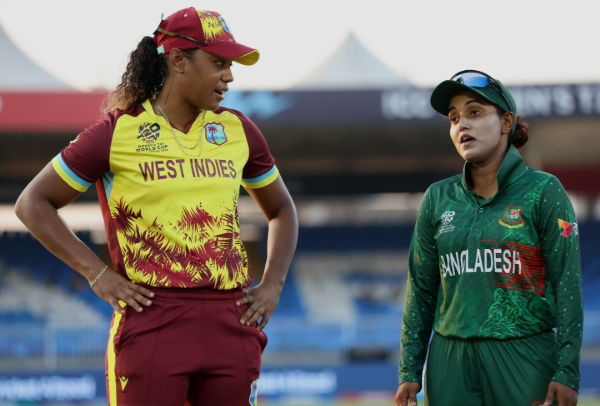
The rivalry between Bangladesh Women’s National Cricket Team and West Indies Women’s Cricket Team is a story of contrast, growth, and changing balance in international women’s cricket. West Indies entered the contest with natural power, aggressive batting, and experienced match-winners who often controlled early encounters. Bangladesh arrived with discipline, spin-heavy tactics, and a long-term development mindset. What began as one-sided scorecards gradually evolved into competitive battles filled with pressure moments, tactical shifts, and emotional swings. Over time, this rivalry has reflected not just match results but also the evolution of two different cricket philosophies colliding on the same stage.
Recent Matches Summary
Match Date
Format / Tournament
Winner and Margin
Key Performers
17 Apr 2025
World Cup Qualifier
West Indies won by 3 wickets
Sharmin Akhter (67), Aaliyah Alleyne (4/39)
31 Jan 2025
3rd T20I (Bilateral)
West Indies won by 5 wickets
Jannillea Glasgow (MOM)
29 Jan 2025
2nd T20I (Bilateral)
West Indies won by 106 runs
Hayley Matthews (Captain)
27 Jan 2025
1st T20I (Bilateral)
West Indies won by 8 wickets
Deandra Dottin (MOM)
24 Jan 2025
3rd ODI (Bilateral)
West Indies won by 8 wickets
Karishma Ramharack (MOM)
Bangladesh Women Innings: 227/9 (50 Overs)
Batter
Dismissal
Runs
Balls
4s
6s
Sharmin Akhter
b Alleyne
67
79
10
0
Fargana Hoque
c and b Alleyne
42
78
3
0
Nahida Akter
c Henry b Alleyne
25
39
4
0
Rabeya Khan
not out
23
20
5
0
Ritu Moni
b Fletcher
15
26
0
1
Others / Extras
—
55
—
—
—
West Indies Bowler
Overs
Maidens
Runs Given
Wickets
Aaliyah Alleyne
9.0
2
39
4
Hayley Matthews
9.5
0
42
2
Afy Fletcher
10.0
0
43
2
Chinelle Henry
7.0
1
38
1
West Indies Women Innings: 228/7 (46 Overs)
Batter
Runs
Balls
4s
6s
Chinelle Henry
51
48
5
2
Stafanie Taylor
36
51
2
0
Hayley Matthews
33
45
3
0
Qiana Joseph
31
39
4
1
Shemaine Campbelle
24
32
4
0
Others / Extras
53
Bangladesh Bowler
Overs
Maidens
Runs Given
Wickets
Marufa Akter
9.0
2
38
2
Nahida Akter
8.0
1
31
1
Fahima Khatun
7.0
0
30
1
Jannatul Ferdus
9.0
0
49
1
Rabeya Khatun
9.0
1
49
1
Ritu Moni
3.0
0
14
1
Top Run Scorers
Batter
Team
Key Formats / Impact
Notable High Score
Hayley Matthews
West Indies
Dominates white-ball formats as a top-order anchor
50+ runs consistently
Deandra Dottin
West Indies
Known for aggressive power-hitting in T20Is
Quick-fire 50s and 30s
Sharmin Akhter
Bangladesh
Reliable anchor for Bangladesh in longer formats
67 off 79 balls (April 2025)
Stafanie Taylor
West Indies
Highly consistent run-machine in both T20I and ODI
Multiple 30+ anchors
Fargana Hoque
Bangladesh
Solid top-order structural batter for Bangladesh
42 runs (April 2025)
Top Wicket Takers
Bowler
Team
Average / Economy Impact
Best Match Figures
Karishma Ramharack
West Indies
Tight off-spinner, heavily restrictive
4 for 12
Aaliyah Alleyne
West Indies
Medium-pacer with incredible breakthrough abilities
Rivalry Origins: Two Teams, Two Different Cricket Worlds
The rivalry between Bangladesh Women and West Indies Women began with two contrasting cricket identities shaped by geography, culture, and development systems. West Indies entered the international women’s circuit earlier with natural attacking flair, powerful hitters, and instinct-driven cricket. Bangladesh, on the other hand, developed through structured coaching systems focused on discipline, spin control, and gradual improvement. Their early meetings were less about rivalry and more about exposure for Bangladesh against a more experienced unit. However, even in one-sided scorecards, Bangladesh gained tactical lessons in handling pace, building partnerships, and managing pressure. West Indies set the benchmark, but Bangladesh quietly started shaping their response for future encounters.
Season
Matches
Winner
Score Margin
Key Highlight
2012-2015
4
West Indies Women
Dominant wins
Experience gap visible
2016-2018
3
West Indies Women
Comfortable wins
Taylor and Dottin dominance
2019-2021
5
West Indies Women
Narrowing margins
Bangladesh improved spin
2022-2025
4
Mixed
Competitive games
Bangladesh rising challenge
First Encounters and Early Dominance of West Indies Women
In the first phase of this rivalry, West Indies Women completely controlled proceedings with aggressive batting and sharper bowling execution. Their top order consistently attacked Bangladesh’s inexperienced bowling lineup, often setting or chasing targets with ease. Players like Stafanie Taylor anchored innings while Deandra Dottin brought explosive finishes that defined the early scorecards. Bangladesh struggled to maintain pressure in powerplays and often lost wickets in clusters. The tactical difference was clear, as West Indies used aggressive field placements and high strike rates, while Bangladesh focused more on survival. These matches established West Indies as the dominant force and exposed Bangladesh to international-level intensity.
Season
Matches
Winner
Score Margin
Key Highlight
2012
2
West Indies
One-sided
Early collapse of Bangladesh batting
2013
2
West Indies
Dominant
Dottin power hitting
2014
3
West Indies
Strong wins
Spin struggle for Bangladesh
2015
2
West Indies
Convincing
Taylor controlled innings
Bangladesh Women’s Learning Phase and Tactical Restructuring
After repeated defeats, Bangladesh Women entered a crucial rebuilding phase focused on long-term improvement. This period saw better coaching structures, increased domestic competition, and stronger emphasis on spin bowling. Players like Salma Khatun and Rumana Ahmed became central to the bowling strategy, especially in restricting middle overs. Batting units started focusing on building partnerships rather than quick scoring. Against West Indies, Bangladesh slowly reduced margin of losses, even if wins were rare. The scorecards began to reflect resistance rather than collapse. This phase was not about victories but about learning how to compete at international standards and reduce errors under pressure.
Season
Matches
Winner
Score Margin
Key Highlight
2016
2
West Indies
Moderate wins
Bangladesh improved bowling control
2017
2
West Indies
Narrower losses
Spin impact increased
2018
3
West Indies
Competitive spells
Better fielding effort
2019
2
West Indies
Close games
Middle order stability
Turning Point Matches Where Bangladesh Started Fighting Back
The rivalry took a noticeable turn when Bangladesh Women began challenging West Indies in key matches with disciplined bowling and improved batting partnerships. Instead of collapsing early, Bangladesh started building innings and forcing West Indies into deeper pressure phases. A few matches saw West Indies restricted to below-par totals due to tight spin bowling. Bangladesh batters also showed improved temperament under chase pressure. While West Indies still won most encounters, the score margins became significantly closer. These matches marked the psychological shift in the rivalry, where Bangladesh stopped fearing opposition strength and started believing in competitive outcomes.
Season
Matches
Winner
Score Margin
Key Highlight
2020
2
West Indies
Narrow wins
Bangladesh fought till final overs
2021
3
West Indies
Close contests
Spin dominance improved
2022
3
Mixed
Competitive
Bangladesh batting resistance
2023
2
West Indies
Tight finishes
Momentum shifts seen
Tactical Evolution in T20 and ODI Clashes
As the rivalry matured, both teams evolved tactically, making matches more competitive and unpredictable. West Indies shifted from pure power hitting to smarter strike rotation and controlled aggression. Bangladesh improved significantly in death bowling and middle overs containment strategies. Fielding standards also improved on both sides, reducing easy runs and increasing pressure moments. The scorecards began reflecting deeper tactical battles rather than one-dimensional dominance. Powerplay phases became crucial, as early wickets often decided match direction. Both teams started using match-ups more intelligently, especially targeting weaker batting zones and key bowlers during specific overs.
Season
Matches
Winner
Score Margin
Key Highlight
2023
3
West Indies
Narrow wins
Tactical adjustments visible
2024
2
Mixed
Very close
Powerplay battles decisive
2025
3
Balanced
Competitive
Strategic gameplay evolved
2026
1
TBD
TBD
Modern tactical rivalry
High Pressure Matches and Momentum Shifts
High pressure matches between Bangladesh Women and West Indies Women often turned unpredictably due to momentum swings. A strong opening spell from West Indies would put Bangladesh under immediate pressure, but disciplined spin spells would bring them back into the contest. Similarly, Bangladesh batting collapses were often followed by lower-order resistance that shifted match tempo. These emotional swings made scorecards look dramatic and unpredictable. Fans witnessed matches changing direction within a few overs, especially during middle phases. This unpredictability has become a defining feature of the rivalry in recent years.
Season
Matches
Winner
Score Margin
Key Highlight
2022
2
West Indies
Close
Momentum shifts frequent
2023
2
Mixed
Tight
Pressure handling key
2024
3
West Indies
Narrow
Final over finishes
2025
2
Balanced
Competitive
Emotional matches
Conclusion
The journey of Bangladesh Women vs West Indies Women matches shows how international cricket rivalries evolve through learning, adaptation, and resilience. West Indies initially dominated with experience and explosive talent, but Bangladesh steadily closed the gap with smarter strategies, improved bowling depth, and stronger batting partnerships. Modern encounters now reflect balance rather than dominance, with tight scorecards and shifting momentum defining the outcome. This rivalry is no longer one-sided but a competitive fixture where every match carries uncertainty, intensity, and pride. It stands as a clear example of how persistence can reshape cricketing narratives over time.