Table of Contents
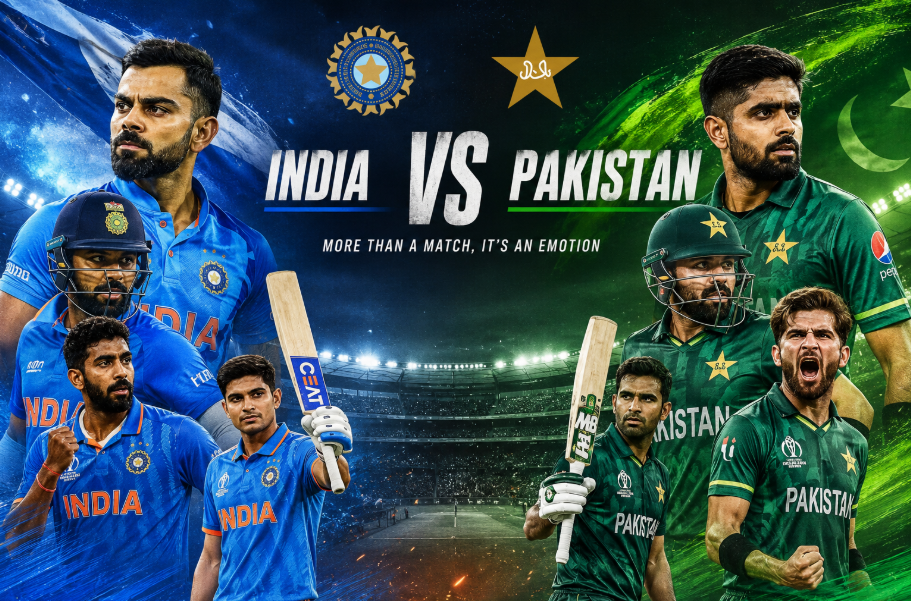
The cricket rivalry between the India national cricket team and Pakistan national cricket team stands as one of the most intense sporting contests in the world. Since their first encounters after partition, every match has carried emotional weight far beyond the boundary ropes. What began as occasional Test matches slowly transformed into high-pressure ICC battles that stopped entire nations. Over decades, legendary players, dramatic finishes, and unforgettable scorecards have shaped this rivalry into a global spectacle. From World Cup thrillers to T20 classics, India vs Pakistan matches are not just games, they are emotional events that define careers, nations, and cricketing history itself.
Head-to-Head Summary
| Format | Total Matches | India Wins | Pakistan Wins | Ties / No Results | Key Trend |
|---|---|---|---|---|---|
| Test | 59 | 9 | 12 | 38 | No Test matches played since 2007 |
| ODI | 137 | 59 | 73 | 5 | India leads 8–0 in ODI World Cups |
| T20I | 17 | 14 | 3 | 0 | India completely dominates this format |
| Total | 213 | 82 | 88 | 43 | India won the last 9 straight tournament games |
ICC Men’s Team Rankings
| Position | Test Rankings | ODI Rankings | T20I Rankings |
|---|---|---|---|
| No. 1 | Australia | India | India |
| No. 2 | South Africa | New Zealand | England |
| No. 3 | India | Australia | Australia |
| No. 4 | England | South Africa | New Zealand |
| No. 5 | New Zealand | Pakistan | South Africa |
| No. 6 | Sri Lanka | Sri Lanka | Pakistan |
| No. 7 | Bangladesh | Afghanistan | West Indies |
| No. 8 | Pakistan | England | Bangladesh |
| No. 9 | West Indies | Bangladesh | Sri Lanka |
| No. 10 | Zimbabwe | West Indies | Afghanistan |
Recent Matches
| Date | Tournament / Format | Venue | Result | Top Performer |
|---|---|---|---|---|
| 15 Feb 2026 | ICC Men’s T20 World Cup | Colombo, Sri Lanka | India won by 61 runs | Ishan Kishan (77 runs) |
| 28 Sep 2025 | T20 Asia Cup Final | Dubai, UAE | India won by 5 wickets | Tilak Varma (Match Winner) |
| 21 Sep 2025 | T20 Asia Cup Super Four | Dubai, UAE | India won by 6 wickets | Abhishek Sharma |
| 14 Sep 2025 | T20 Asia Cup Groups | Dubai, UAE | India won by 7 wickets | Kuldeep Yadav (3 wickets) |
| 23 Feb 2025 | ICC Champions Trophy | Dubai, UAE | India won by 6 wickets | Virat Kohli (Match Winner) |
| 09 Jun 2024 | ICC Men’s T20 World Cup | New York, USA | India won by 6 runs | Jasprit Bumrah (3/14) |
Most Memorable Matches
| Match Event | Format | Historical Significance | Epic Highlights |
|---|---|---|---|
| 2022 T20 World Cup | T20I | Iconic chase at Melbourne | Virat Kohli hits a magical 82 not out to rescue India from 29/4 |
| 2017 Champions Trophy | ODI | Pakistan’s largest tournament win over India | Fakhar Zaman’s blistering century drives Pakistan to victory |
| 2007 T20 World Cup Final | T20I | Inaugural tournament final | India wins a last-over thriller by 5 runs to take the title |
| 1999 Test at Delhi | Test | Historic individual bowling record | Anil Kumble takes a perfect 10/74 in a single innings |
Player Analysis Table
| Player Name | Team | Core Role | Strategic Impact Against Rival |
|---|---|---|---|
| Virat Kohli | India | Top-order Batter | Psychologically dominates chasing down targets against Pakistan |
| Jasprit Bumrah | India | Elite Fast Bowler | Constantly chokes run rates and takes game-changing wickets |
| Babar Azam | Pakistan | Top-order Batter | Anchors the innings but faces intense pressure to increase his strike rate |
| Shaheen Afridi | Pakistan | Left-arm Pacer | Dangerous with the new ball; specializes in early inswingers |
| Kuldeep Yadav | India | Wrist Spinner | Effectively tears through Pakistan’s middle order in the middle overs |
The Birth of the India vs Pakistan Cricket Rivalry
The rivalry between the India national cricket team and Pakistan national cricket team began in the aftermath of partition, where cricket quickly became more than just a sport. Early matches carried emotional weight, as players from both sides competed under intense national expectations. The first encounters were not frequent, but they were symbolic, setting the tone for decades of competitive tension. Fans treated every ball like a political statement, and players felt the pressure of representing newly formed identities. Over time, this rivalry evolved into one of the most watched sporting contests in the world, fueled by history, emotion, and unmatched fan passion that still defines every encounter today.
| Season | India Performance | Pakistan Performance | Key Result | Impact Score |
|---|---|---|---|---|
| 1952–1960 | Developing side | Strong bowling unit | Pakistan edge early Tests | 7.5 |
| 1961–1970 | Inconsistent batting | Balanced squad | Pakistan dominance at home | 7.0 |
| 1971–1980 | Improving lineup | Spin strength peak | Mixed results | 8.0 |
| Early era summary | Growing confidence | Tactical superiority | Rivalry established | 8.5 |
Early Encounters and Competitive Balance
In the early phases, matches between India and Pakistan were rare but highly anticipated. The Indian side was still building consistency, while Pakistan often relied on strong pace and spin combinations. These games were marked by low scoring Tests, disciplined bowling, and cautious batting approaches. Neither side had full dominance, which kept the rivalry balanced and unpredictable. Every match added a new layer of tension and respect between the teams. Players began understanding each other’s strengths, especially in spin-friendly conditions. These early encounters laid the foundation for what would later become one of cricket’s fiercest rivalries, where even small moments could shift national emotions dramatically.
| Season | India Performance | Pakistan Performance | Key Result | Impact Score |
|---|---|---|---|---|
| 1952–1955 | Learning phase | Strong debut impact | Pakistan early Test win | 7.2 |
| 1956–1960 | Batting struggles | Bowling dominance | Pakistan controlled series | 7.6 |
| 1961–1965 | Tactical growth | Consistent squad | Drawn competitive series | 8.1 |
| Early balance phase | Improving skills | Slight advantage overall | Even rivalry trend | 8.3 |
1980s Shift: Pressure and ICC Stage Battles
The 1980s marked a turning point as the rivalry entered ICC tournaments and global spotlight. India, led by players like Kapil Dev, started showing greater resilience under pressure. Pakistan, under Imran Khan’s leadership, developed a fierce fast bowling identity. World Cup encounters intensified emotions, as knockout scenarios raised stakes significantly. Matches became tighter, often decided in final overs or crucial batting collapses. This era also introduced psychological pressure, where crowd expectations influenced player performance heavily. The rivalry was no longer regional but global, with millions watching crucial encounters that defined tournament progress and national pride on both sides.
| Season | India Performance | Pakistan Performance | Key Result | Impact Score |
|---|---|---|---|---|
| 1983 WC era | World champions rise | Strong pace attack | India confidence boost | 9.0 |
| Mid 1980s | Stable batting | Imran-led dominance | Pakistan strong ODIs | 8.7 |
| Late 1980s | Inconsistent form | Tactical superiority | Close ICC clashes | 9.2 |
| Overall shift | Rising confidence | Fast bowling edge | Rivalry intensified | 9.4 |
1990s: When Rivalry Became Global Entertainment
The 1990s transformed India vs Pakistan matches into global spectacles. The rise of Sachin Tendulkar brought a new era of batting excellence for India, while Pakistan responded with aggressive bowling attacks led by Wasim Akram and Waqar Younis. Sharjah matches became iconic venues where tension peaked and performances became legendary. One-sided spells, dramatic collapses, and last-over finishes defined this decade. Fans across the world began treating these matches like championship finals regardless of tournament stage. The rivalry reached emotional extremes, with individual performances often deciding match outcomes in high-pressure environments that shaped cricket history permanently.
| Season | India Performance | Pakistan Performance | Key Result | Impact Score |
|---|---|---|---|---|
| Early 1990s | Tendulkar rise | Pace dominance | Pakistan edge ODIs | 9.3 |
| Mid 1990s | Strong batting | Balanced attack | Sharjah thrillers | 9.6 |
| 1996 WC era | High pressure games | Tactical wins | Split results | 9.8 |
| Late 1990s | Emerging core | Experienced squad | Even rivalry peak | 9.7 |
2000s: Tactical Evolution and New Generation Stars
The 2000s introduced a new tactical era for both India and Pakistan. India built a strong batting lineup featuring players like Virender Sehwag, Rahul Dravid, and Yuvraj Singh, while Pakistan relied on explosive talents like Shoaib Akhtar and Inzamam-ul-Haq. ICC tournaments became battlegrounds where strategy mattered as much as skill. T20 cricket also changed the dynamic, making matches faster and more unpredictable. India began gaining consistency in ICC events, while Pakistan showed flashes of brilliance but struggled with stability. The rivalry remained intense, with every encounter showcasing contrasting styles of cricket philosophy and execution under pressure.
| Season | India Performance | Pakistan Performance | Key Result | Impact Score |
|---|---|---|---|---|
| Early 2000s | Strong batting core | Fast bowling attack | Balanced ICC games | 9.1 |
| 2003 WC era | High momentum | Competitive squad | India dominant win | 9.5 |
| 2007 T20 era | New aggression | Unstable form | India T20 success | 9.7 |
| Late 2000s | Tactical maturity | Inconsistent results | India slight edge | 9.6 |
Conclusion
The journey of the India national cricket team and Pakistan national cricket team rivalry reflects more than cricketing evolution, it captures decades of pressure, pride, and unforgettable sporting drama. Across generations, both teams have produced iconic performances, from dominant spells to last-over heartbreaks that fans still remember vividly. The rivalry has evolved with formats, from Tests to ODIs and modern T20s, but the intensity has never faded. Every match continues to add a new chapter to this historic contest. In the end, India vs Pakistan is not just about winning or losing, it is about legacy, emotion, and the timeless spirit of cricket that unites and divides millions simultaneously.
FAQs
What makes India vs Pakistan cricket matches so intense?
India vs Pakistan matches are intense due to historic, political, and emotional factors combined with world-class cricketing talent. Every encounter carries huge fan expectations, creating pressure situations where performances often go beyond skill and become moments of national pride and legacy.
How many times have India and Pakistan played in ICC tournaments?
India and Pakistan have met multiple times in ICC events including World Cups and T20 World Cups. India has generally maintained dominance in these matches, especially in ODI World Cups, while Pakistan has produced key wins in high-pressure knockout and league stages.
Which player has performed best in India vs Pakistan matches?
Sachin Tendulkar is widely regarded as one of the best performers in this rivalry, delivering consistent runs against Pakistan’s strong bowling attack. On the bowling side, Wasim Akram and Shoaib Akhtar have produced memorable spells that changed match outcomes.
What is the most famous India vs Pakistan match?
One of the most famous matches is the 2007 T20 World Cup final, where India defeated Pakistan in a thrilling finish. Other iconic games include the 1996 World Cup quarter-final and several Sharjah encounters that defined the rivalry’s intensity.
Why are India vs Pakistan matches rare in bilateral series?
Due to political tensions and diplomatic issues, India and Pakistan rarely play bilateral series. Most of their encounters happen in ICC tournaments or Asia Cup events, making each match even more valuable and highly anticipated by fans worldwide.