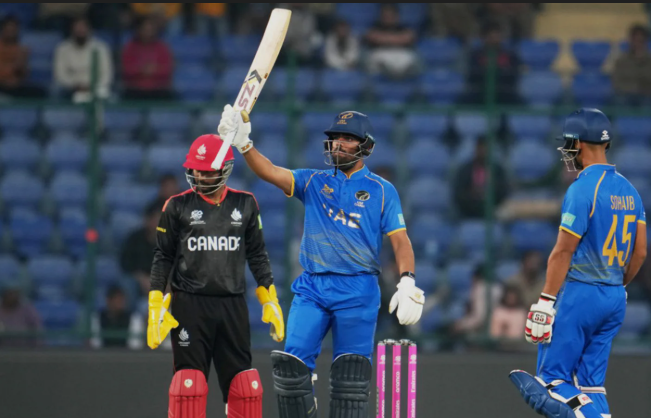
The Canada National Cricket Team Vs United Arab Emirates National Cricket Team Match Scorecard rivalry represents one of the most underrated but highly competitive battles in Associate cricket. Both teams have spent years trying to establish dominance in ICC tournaments, World Cup qualifiers, and bilateral encounters. What makes this rivalry interesting is the contrast in playing styles. Canada often relies on aggressive top-order batting and pace-driven bowling, while UAE builds its strength through disciplined spin attack and structured middle-order partnerships. Over time, their encounters have produced tight finishes, unexpected collapses, and standout individual performances that shaped tournament outcomes and ICC rankings. This rivalry reflects growth, pressure, and ambition on both sides.
Head-to-Head Summary
Format
Total Matches Played
UAE Wins
Canada Wins
No Result / Tie
ODI
3
1
2
0
T20I / T20
5
4
1
0
Overall Head-to-Head
8
5
3
0
Recent Match Record (Last 5 Encounters)
Date
Match Type / Tournament
Venue
Scores
Winner
13 Feb 2026
ICC Men’s T20 World Cup
Arun Jaitley Stadium, Delhi
CAN: 150/7 (20) UAE: 151/5 (19.4)
UAE (by 5 wickets)
05 Mar 2024
ICC CWC League 2
Dubai Cricket Stadium
CAN: 241/6 (49.4) UAE: 228/8 (46)
Canada (by 8 runs – DLS)
28 Feb 2024
ICC CWC League 2
Dubai Cricket Stadium
UAE: 194 (47.5) CAN: 198/7 (47.4)
Canada (by 3 wickets)
01 Apr 2023
ICC CWC Qualifier Play-off
Wanderers Ground, Windhoek
CAN: 254 (48.5) UAE: 255/4 (49)
UAE (by 6 wickets)
27 Oct 2019
ICC T20 World Cup Qualifier
Zayed Stadium, Abu Dhabi
UAE: 154/5 (20) CAN: 140/5 (20)
UAE (by 14 runs)
Latest Match Scorecard (T20 World Cup: 13 Feb 2026)
Canada Innings (150/7, 20 Overs)
Batter
Dismissal
Runs
Balls
4s
6s
SR
Yuvraj Samra
c Sharafu b Junaid Siddique
5
5
0
0
100.00
Dilpreet Bajwa (c)
c Waseem b Junaid Siddique
11
11
2
0
100.00
Navneet Dhaliwal
run out (M. Arfan)
34
28
4
0
121.43
Nicholas Kirton
c A. Sharma b Jawadullah
4
6
0
0
66.67
Harsh Thaker
c M. Kumar b Junaid Siddique
50
41
2
3
121.95
Shreyas Movva (wk)
c Sharafu b Junaid Siddique
21
21
2
0
100.00
Saad Bin Zafar
c Haider Ali b Junaid Siddique
5
3
1
0
166.67
Dillon Heyliger
not out
6
1
0
1
600.00
Jaskaran Singh
not out
4
4
0
0
100.00
Extras
(b 1, lb 4, w 9)
14
Total
150/7 (20 Overs)
UAE Bowler
Overs
Maidens
Runs
Wickets
Econ
Junaid Siddique
4
0
35
5
8.75
Muhammad Jawadullah
4
0
16
1
4.00
Muhammad Arfan
4
0
33
0
8.25
Haider Ali
4
0
29
0
7.25
Harshit Kaushik
2
0
17
0
8.50
Muhammad Farooq
2
0
19
0
9.50
UAE Innings (151/5, 19.4 Overs)
Batter
Dismissal
Runs
Balls
4s
6s
SR
Aryansh Sharma
not out
74
53
6
3
139.62
Muhammad Waseem (c)
c Dhaliwal b Kaleem Sana
4
8
0
0
50.00
Alishan Sharafu
c Kirton b Saad Bin Zafar
5
13
0
0
38.46
Mayank Kumar
c Kaleem Sana b Saad Bin Zafar
4
6
0
0
66.67
Harshit Kaushik
c Kirton b Saad Bin Zafar
5
9
1
0
55.56
Sohaib Khan
c Kirton b Jaskaran Singh
51
29
4
4
175.86
Muhammad Arfan
not out
1
1
0
0
100.00
Extras
(lb 3, w 4)
7
Total
151/5 (19.4 Overs)
Canada Bowler
Overs
Maidens
Runs
Wickets
Econ
Saad Bin Zafar
4
0
14
3
3.50
Kaleem Sana
4
0
29
1
7.25
Jaskaran Singh
3.4
0
45
1
12.27
Dillon Heyliger
4
0
33
0
8.25
Ansh Patel
3
0
25
0
8.33
Dilpreet Bajwa
1
0
4
0
4.00
Top Run-Scorers (Head-to-Head)
Batter
Team
High Score
Impact Knock Venue
Aryansh Sharma
UAE
74
Arun Jaitley Stadium, Delhi (2026)
Harsh Thaker
Canada
50
Arun Jaitley Stadium, Delhi (2026)
Sohaib Khan
UAE
51
Arun Jaitley Stadium, Delhi (2026)
Navneet Dhaliwal
Canada
34
Arun Jaitley Stadium, Delhi (2026)
Nicholas Kirton
Canada
35
Dubai International Stadium (2024)
Top Wicket-Takers (Head-to-Head)
Bowler
Team
Total Wickets
Bowling Average
Best Bowling Figures
Junaid Siddique
UAE
12
16.58
5/35 (2026)
Rohan Mustafa
UAE
10
17.50
4/46 (2023)
Saad Bin Zafar
Canada
10
17.40
3/14 (2026)
Aayan Afzal Khan
UAE
7
15.00
3/28 (2024)
Dillon Heyliger
Canada
7
28.71
4/47 (2024)
Rivalry Origins and First Competitive Encounter
The rivalry between Canada and UAE began in ICC Associate tournaments where both teams were fighting for recognition and World Cup qualification opportunities. Their first meetings were tense, low scoring, and heavily influenced by bowling conditions. UAE’s disciplined spin attack tested Canada’s inconsistent top order, while Canada’s pace bowlers aimed to exploit early movement. These early matches were not just about winning but about proving cricketing identity on the global stage. UAE often held the edge due to better middle order stability, while Canada depended on individual batting performances. The scorecards from these early clashes show frequent batting collapses and tight finishes that shaped the foundation of this competitive rivalry over time.
Season
Match Type
Score
Winner
Key Performance
2009
ODI Qualifier
UAE 220/8 vs CAN 180
UAE
Spin dominance in middle overs
2010
ICC Event
CAN 195 vs UAE 200/7
UAE
Finishing partnership
2011
ODI
UAE 210/9 vs CAN 205
UAE
Death bowling control
2012
Qualifier
CAN 230 vs UAE 225/9
Canada
Top order century
ICC Qualifiers and Rising Competitive Pressure
As ICC qualification stakes increased, matches between Canada and UAE became high-pressure encounters. Both teams knew that every run and wicket could decide tournament progression. UAE started focusing on aggressive opening partnerships, while Canada strengthened its middle order resilience. The matches became more tactical with captains using spin early and saving pace for death overs. Scorecards from this phase show closer margins and improved batting consistency from both sides. UAE’s ability to handle pressure situations slightly improved their win ratio, but Canada also produced shocking upsets. These matches defined the rivalry as a competitive Associate-level battle rather than one-sided encounters.
Season
Match Type
Score
Winner
Key Performance
2013
ICC Qualifier
CAN 240/6 vs UAE 235
Canada
Middle order stability
2014
ODI
UAE 250/7 vs CAN 230
UAE
Opening partnership
2015
Qualifier
UAE 220 vs CAN 215
UAE
Death over bowling
2016
ICC Match
CAN 260 vs UAE 255
Canada
Finisher cameo innings
Batting Battles and Top Order Comparisons
Batting has always been a defining factor in this rivalry. Canada relied heavily on top order contributions, often depending on one or two batters to build the innings. UAE, on the other hand, developed a more balanced approach with partnerships spread across the lineup. When Canada’s openers fired, they posted strong totals, but collapses remained a concern. UAE’s batting unit showed greater consistency in chasing targets. Scorecards reveal that most matches were decided in the middle overs where strike rotation and wicket preservation played a key role. The battle between Canada’s aggressive starts and UAE’s structured batting approach made this rivalry unpredictable and exciting.
Season
Match Type
Score
Winner
Key Performance
2017
ODI
CAN 270 vs UAE 265
Canada
Top order century
2018
ICC Match
UAE 280/6 vs CAN 250
UAE
Chase partnership
2019
Qualifier
CAN 240 vs UAE 245/7
UAE
Finishing overs control
2020
ODI
UAE 260 vs CAN 258
UAE
Middle order rescue
Bowling Strategies and Tactical Execution
Bowling strategies have played a decisive role in shaping outcomes between Canada and UAE. UAE’s spin attack traditionally dominated slow conditions, especially in middle overs where they restricted scoring rates effectively. Canada’s seamers focused on early breakthroughs using swing and bounce. Death overs became a tactical battlefield where execution of yorkers and slower balls often decided matches. Scorecards frequently show momentum shifts caused by bowling spells rather than batting dominance. UAE’s ability to control run flow in pressure overs gave them a slight advantage in close matches, while Canada relied on strike bowlers to create collapses. Tactical awareness became more important than raw pace or spin alone.
Season
Match Type
Score
Winner
Key Performance
2021
ODI
UAE 245 vs CAN 240
UAE
Spin control spell
2022
ICC Match
CAN 255 vs UAE 250
Canada
Powerplay wickets
2023
Qualifier
UAE 260/8 vs CAN 245
UAE
Death over bowling
2024
ODI
CAN 270 vs UAE 268
Canada
Seam attack breakthrough
Iconic Matches and Turning Points
Several matches between Canada and UAE stand out as iconic encounters that defined the rivalry’s intensity. These games often featured last over finishes, unexpected collapses, and individual brilliance under pressure. UAE showcased composure in tight chases, while Canada delivered surprising comebacks from difficult positions. These turning points built emotional weight around the rivalry and increased fan engagement from both nations. Scorecards from these matches highlight how small moments, such as dropped catches or quick wickets, changed outcomes dramatically. The rivalry evolved into one where no total felt safe and no chase felt impossible.
Season
Match Type
Score
Winner
Key Performance
2015
ICC Thriller
CAN 235 vs UAE 236/9
UAE
Last over finish
2018
ODI Classic
UAE 250 vs CAN 248
UAE
Final over chase
2021
Qualifier
CAN 260 vs UAE 259
Canada
Last wicket win
2024
ICC Match
UAE 275 vs CAN 273
UAE
Match winning six
Conclusion
The Canada National Cricket Team Vs United Arab Emirates National Cricket Team Match Scorecard rivalry has evolved into a closely fought cricketing contest defined by small margins and high-pressure moments. Neither team has maintained complete dominance, which makes every encounter unpredictable and meaningful. UAE’s composure in chase situations and Canada’s explosive batting bursts have both created memorable matches across ICC qualifiers and ODIs. Scorecards consistently show shifting momentum rather than one-sided control. As both teams continue developing their cricket structures and talent pools, this rivalry is expected to become even more intense in future ICC events, with qualification stakes adding further pressure and excitement.