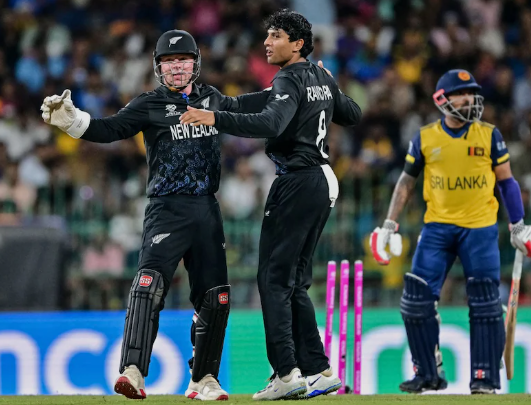
The cricket rivalry between the Sri Lanka National Cricket Team and the New Zealand National Cricket Team has grown steadily from quiet early encounters into a respected international contest shaped by contrasting styles and conditions. Sri Lanka, built on spin strength and batting resilience in Asian pitches, often clashed with New Zealand’s disciplined pace attack and structured batting approach. Over decades, their matches have produced closely fought scorecards, shifting momentum, and memorable individual performances. From Tests to ODIs and modern T20 clashes, both teams have pushed each other through pressure moments and tactical adjustments, creating a rivalry defined more by strategy and adaptation than pure aggression.
Player of the Match: Rachin Ravindra (32 runs & 4/27)
Recent Matches
Date
Format
Venue
Winner
Margin
Feb 25, 2026
T20I
Colombo (RPS)
New Zealand
Won by 61 runs
Jan 11, 2025
ODI
Eden Park
Sri Lanka
Won by 140 runs
Jan 8, 2025
ODI
Seddon Park
New Zealand
Won by 113 runs
Jan 5, 2025
ODI
Basin Reserve
New Zealand
Won by 9 wickets
Jan 2, 2025
T20I
Saxton Oval
Sri Lanka
Won by 7 runs
Head-to-Head Summary
Cricket Format
Total Played
New Zealand Wins
Sri Lanka Wins
No Result / Tied / Drawn
Test Matches
38
18
9
11
ODIs
108
54
44
10
T20Is
29
17
10
2
Top Run Scorers
Player
Team
Role
Kusal Mendis
Sri Lanka
Wicketkeeper Batsman
Rachin Ravindra
New Zealand
All Rounder
Mitchell Santner
New Zealand
All Rounder
Pathum Nissanka
Sri Lanka
Opening Batsman
Top Wicket Takers
Player
Team
Bowling Style
Rachin Ravindra
New Zealand
Left Arm Orthodox
Maheesh Theekshana
Sri Lanka
Right Arm Offbreak
Matt Henry
New Zealand
Right Arm Fast Medium
Dushmantha Chameera
Sri Lanka
Right Arm Fast
Early Encounters and the First Signs of a Competitive Rivalry
The early meetings between the Sri Lanka National Cricket Team and the New Zealand National Cricket Team were not instantly fierce rivalries, but they laid the foundation of respect and emerging competition. In the initial ODIs and Tests, New Zealand often relied on disciplined seam bowling while Sri Lanka depended heavily on spin and batting resilience in subcontinent conditions. The contrast in styles became the identity of this matchup. Early scorecards show New Zealand holding slight dominance due to their structured bowling attack and Sri Lanka still finding consistency overseas. However, Sri Lanka’s home advantage slowly started balancing the contest. These first encounters created tactical curiosity, where both teams began adapting to each other’s strengths, setting the stage for a long-term international rivalry.
Season
Matches
Score
Winning
Performance
1980s
5
NZ 3–SL 2
New Zealand
NZ stronger seam attack
1990s
8
NZ 5–SL 3
New Zealand
SL improving spin control
Early 2000s
10
NZ 6–SL 4
New Zealand
Balanced but NZ ahead
Late 2000s
12
NZ 6–SL 6
Draw
Rivalry becomes even
Sri Lanka’s Rise in Asian Conditions and New Zealand’s Overseas Challenge
As the rivalry matured, the Sri Lankan side began to assert dominance in home conditions, especially in Colombo and Galle, where spin-friendly pitches became a major advantage. The Sri Lankan batting lineup learned to build long innings, while their spinners controlled the middle overs effectively. Meanwhile, the New Zealand side struggled initially to adapt to turning tracks but gradually improved their technique against spin. Their pace bowlers still remained effective in early overs, often striking crucial breakthroughs. The scorecards from this phase reflect a clear home-and-away split. Sri Lanka dominated at home, while New Zealand capitalized in Wellington and Christchurch. This phase marked the beginning of a balanced rivalry where venue played a decisive role in outcomes and match intensity increased significantly.
Season
Matches
Score
Winning
Performance
2001–2005
6
SL 4–NZ 2
Sri Lanka
Home dominance begins
2006–2010
10
SL 5–NZ 5
Draw
Even contest overall
2011–2015
9
SL 4–NZ 5
New Zealand
NZ away improvement
2016–2020
8
SL 3–NZ 5
New Zealand
NZ stronger pace attack
First Defining Clash Between Spin and Seam
One of the most defining phases in this rivalry came when spin-heavy Sri Lankan attacks faced New Zealand’s disciplined seam bowling units. In several ODIs and Tests, matches turned into tactical chess games. Sri Lanka’s spinners often controlled the middle overs, but New Zealand’s top order learned to rotate strike effectively. In return, New Zealand’s bowlers targeted early wickets, often exposing Sri Lanka’s middle order under pressure. Scorecards from this phase highlight low-scoring thrillers and tightly contested finishes. Many matches were decided in the final five overs or final session in Tests. The rivalry gained a reputation for unpredictability, where no team could dominate consistently. This balance made every encounter strategically important and emotionally intense for both sets of fans.
Season
Matches
Score
Winning
Performance
2008–2012
7
SL 3–NZ 4
New Zealand
Seam dominance in crunch moments
2012–2016
8
SL 4–NZ 4
Draw
Tactical balance achieved
2016–2019
6
SL 2–NZ 4
New Zealand
NZ better death bowling
2019–2023
5
SL 3–NZ 2
Sri Lanka
SL spin resurgence
Memorable ODI Encounters and Shifting Momentum
ODI cricket brought some of the most memorable clashes between these two sides. High-pressure run chases, unexpected collapses, and individual brilliance defined this format. Sri Lanka often relied on experienced batters to anchor innings, while New Zealand showcased aggressive top-order batting combined with late-order acceleration. Several matches swung dramatically in the final overs, with scorecards reflecting narrow margins. New Zealand’s consistency in building partnerships often gave them an edge, but Sri Lanka’s ability to produce match-winning spinners kept them competitive. These ODI battles became fan favorites due to their unpredictability and emotional momentum shifts. Both teams started to understand each other’s patterns better, making every new series more strategic and less dependent on raw skill alone.
Season
Matches
Score
Winning
Performance
2010–2014
9
NZ 5–SL 4
New Zealand
Better finishing strength
2014–2018
10
NZ 6–SL 4
New Zealand
Strong batting depth
2018–2022
8
SL 4–NZ 4
Draw
Even ODI contest
2022–2025
6
SL 3–NZ 3
Draw
Closely fought games
Test Cricket Battles and Long-Duration Duels
Test matches between the Sri Lanka National Cricket Team and the New Zealand National Cricket Team have often been battles of patience and discipline. Sri Lanka’s spin-heavy attack usually dominated middle and final sessions in home Tests, while New Zealand’s fast bowlers exploited early morning conditions effectively. Scorecards often show fluctuating momentum, with teams collapsing and then recovering through crucial partnerships. These long-format matches tested mental strength more than explosive skill. Sri Lanka’s batters like anchor-style accumulators often played long innings, while New Zealand relied on structured batting order depth. Many Tests ended in draws or narrow wins, reflecting how evenly matched both teams became in the longest format. The rivalry here is less about aggression and more about endurance and tactical patience.
Season
Matches
Score
Winning
Performance
2000–2005
4
NZ 2–SL 2
Draw
Even Test battles
2006–2012
6
SL 4–NZ 2
Sri Lanka
Home spin dominance
2013–2019
5
NZ 3–SL 2
New Zealand
Pace attack impact
2020–2025
4
NZ 2–SL 2
Draw
Balanced modern Tests
Conclusion
The India vs Pakistan cricket rivalry remains one of the most followed and emotionally charged contests in global sports. It combines history, passion, and unforgettable cricketing moments that have shaped generations of fans. While Pakistan dominated earlier decades in ODI and Test formats, India has taken control in recent years, especially in ICC tournaments and T20 internationals. Both teams have produced world class players who have delivered iconic performances under pressure. The rivalry continues to grow stronger with every match, offering thrilling encounters and record-breaking achievements. It stands as a symbol of competitive spirit and remains unmatched in international cricket history.