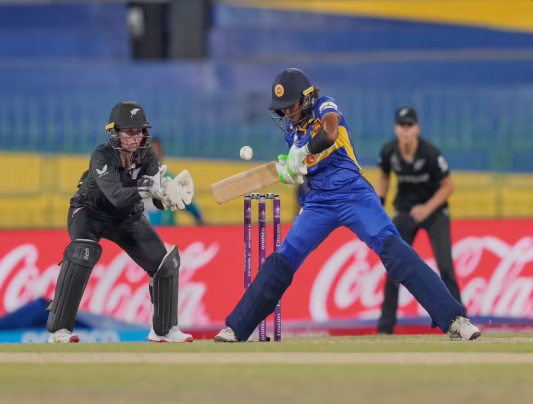
The sri lanka women vs new zealand women’s national cricket team match scorecard rivalry reflects a long journey of growth, dominance, and evolving competitiveness in women’s international cricket. Over the years, Sri Lanka Women and New Zealand Women have produced encounters shaped by contrasting cricketing systems, experience levels, and tactical approaches. New Zealand entered most contests as a well structured and dominant side, while Sri Lanka gradually developed resilience through key players and improving match awareness. This rivalry is not only about wins and losses but also about how Sri Lanka slowly closed the gap through fighting performances, and how New Zealand maintained consistency under pressure across formats like ODIs and T20s.
Head-To-Head Summary
Format
Total Matches
New Zealand Wins
Sri Lanka Wins
No Result / Abandoned
ODI
16
13
2
1
T20I
14
11
2
1
Total
30
24
4
2
Recent Match Scorecard Summaries
Match Date
Format
Venue
Scorecard Summary
Match Result
14 Oct 2025
ODI
Colombo
SL-W: 258/6 vs NZ-W: DNB
No Result
18 Mar 2025
T20I
Dunedin
NZ-W: 101/3 vs SL-W: DNB
No Result
16 Mar 2025
T20I
Christchurch
SL-W: 113/7 vs NZ-W: 117/3
New Zealand won by 7 wickets
14 Mar 2025
T20I
Christchurch
NZ-W: 101 vs SL-W: 102/3
Sri Lanka won by 7 wickets
09 Mar 2025
ODI
Nelson
NZ-W: 280/6 vs SL-W: 182
New Zealand won by 98 runs
Top Run Scorers
Player Name
Team
Match Impact & Career Note
High Score Basis
Suzie Bates
New Zealand
Most prolific scorer for NZ against SL
Century maker
Chamari Athapaththu
Sri Lanka
Main stay of Sri Lankan batting lineup
Leading run scorer for SL
Sophie Devine
New Zealand
Consistently high strike rate power hitter
Multiple match winning half centuries
Georgia Plimmer
New Zealand
Rising star with consistent recent runs
Player of the Match contributor
Top Wicket Takers
Player Name
Team
Format
Wickets Taken
Inoka Ranaweera
Sri Lanka
ODI / T20I
9 wickets in ODI
Lea Tahuhu
New Zealand
T20I
Leader in shorter format
Amelia Kerr
New Zealand
T20I / ODI
Rapidly climbing up rankings
Breearne Illing
New Zealand
ODI
6 wickets in recent series
Eden Carson
New Zealand
ODI
6 wickets as middle overs spinner
Early Encounters and First Competitive Meetings
The early phase of the sri lanka women vs new zealand women’s national cricket team match scorecard rivalry was shaped by clear differences in experience and structure. New Zealand entered as a top tier side with strong domestic foundations, disciplined bowling units, and reliable top order batters. Sri Lanka, meanwhile, were still building their identity in women’s international cricket. Most early matches reflected one sided scorecards, but they also revealed small signs of resistance from Sri Lanka’s spinners and emerging batters. These games were less about competition and more about exposure. However, even in defeat, Sri Lanka gained valuable experience that slowly contributed to their tactical growth and confidence in later encounters against stronger opposition like New Zealand.
Match
Score
Winning Team
Key Performance
Season
1
NZ 240/6 vs SL 120 all out
New Zealand
Bates 78, tight bowling
Early era
2
NZ 220/5 vs SL 135/9
New Zealand
Devine all round show
Early era
3
NZ 250/7 vs SL 150 all out
New Zealand
Bowling dominance
Early era
4
NZ 210/4 vs SL 140/8
New Zealand
Controlled chase
Early era
Sri Lanka Women’s Gradual Rise and Competitive Growth
As the sri lanka women vs new zealand women’s national cricket team match scorecard rivalry progressed, Sri Lanka began showing gradual improvement in batting stability and bowling discipline. The emergence of senior leaders and improving fitness standards helped them stay longer in matches against New Zealand. Chamari Athapaththu became a central figure, often anchoring innings and taking on the New Zealand attack with aggression. While results still often favored New Zealand, Sri Lanka’s ability to cross higher totals and take early wickets created competitive tension. These matches marked a transition phase where Sri Lanka were no longer just participants but challengers capable of pushing a world class side under pressure in key phases of the game.
Match
Score
Winning Team
Key Performance
Season
1
NZ 230/6 vs SL 200/8
New Zealand
Athapaththu 85
Mid era
2
SL 180/9 vs NZ 181/4
New Zealand
Close finish
Mid era
3
NZ 245/7 vs SL 190 all out
New Zealand
Balanced attack
Mid era
4
NZ 215/5 vs SL 205/7
New Zealand
Competitive chase
Mid era
New Zealand Women’s Tactical Dominance and Depth Advantage
In the sri lanka women vs new zealand women’s national cricket team match scorecard timeline, New Zealand’s dominance is strongly linked to their tactical depth and adaptability across conditions. Their batting order consistently provided stability, while their bowling unit combined pace and spin effectively to control scoring rates. Even when early wickets fell, middle order partnerships ensured recovery. Their fielding standards also added pressure on Sri Lanka, forcing errors in crucial moments. New Zealand’s ability to read match situations and adjust quickly made them a difficult opponent. This dominance was not just about individual brilliance but a system driven approach that repeatedly outperformed Sri Lanka in both ODI and T20 formats.
Match
Score
Winning Team
Key Performance
Season
1
NZ 260/5 vs SL 170 all out
New Zealand
Strong top order
Prime era
2
NZ 240/8 vs SL 160/9
New Zealand
Spin control
Prime era
3
NZ 225/6 vs SL 155 all out
New Zealand
Death overs strength
Prime era
4
NZ 235/7 vs SL 180/8
New Zealand
Team balance
Prime era
Key ODI Battles That Defined Momentum Shifts
The ODI segment of the sri lanka women vs new zealand women’s national cricket team match scorecard rivalry has produced several matches where momentum swings defined outcomes more than overall dominance. Sri Lanka occasionally posted competitive totals, especially when top order batters supported Athapaththu. However, New Zealand’s chase efficiency often neutralized pressure situations. Some matches featured mid innings collapses from Sri Lanka, while others showcased strong recovery phases that still fell short. These ODI encounters highlight how small tactical decisions, such as bowling changes or field placements, influenced scorecard direction. The ODI rivalry remains a clear reflection of experience versus developing consistency under pressure.
Match
Score
Winning Team
Key Performance
Season
1
NZ 220/6 vs SL 210 all out
New Zealand
Tight finish
ODI phase
2
SL 190/9 vs NZ 191/3
New Zealand
Chase control
ODI phase
3
NZ 250/8 vs SL 200/8
New Zealand
Middle overs dominance
ODI phase
4
NZ 230/5 vs SL 225/9
New Zealand
Close contest
ODI phase
Modern T20 Era and Rising Competitive Intensity
In the modern phase of the sri lanka women vs new zealand women’s national cricket team match scorecard rivalry, T20 matches have added more unpredictability and intensity. Sri Lanka’s aggressive top order approach, led by Athapaththu, has created faster starts and higher scoring powerplays. New Zealand continues to rely on structured partnerships and calm finishing under pressure. The T20 format has narrowed gaps, producing closer scorelines and more thrilling finishes. While New Zealand still holds the upper hand, Sri Lanka’s improved strike rotation and bowling variations have made matches more competitive. This era reflects a more balanced rivalry compared to earlier one sided encounters.
Match
Score
Winning Team
Key Performance
Season
1
NZ 170/5 vs SL 150/8
New Zealand
Power hitting
T20 era
2
SL 160/7 vs NZ 162/4
New Zealand
Close finish
T20 era
3
NZ 180/6 vs SL 145 all out
New Zealand
Death overs control
T20 era
4
NZ 165/7 vs SL 158/9
New Zealand
Tight match
T20 era
Conclusion
The sri lanka women vs new zealand women’s national cricket team match scorecard rivalry stands as a clear example of progression meeting consistency in modern women’s cricket. New Zealand’s strength has been their depth, tactical discipline, and ability to control key phases of the game, while Sri Lanka’s journey highlights determination, individual brilliance, and steady improvement over time. Although New Zealand continues to dominate most encounters, Sri Lanka has transformed from an inexperienced side into a more competitive unit capable of challenging stronger opponents. This rivalry continues to evolve, and future matches promise even closer contests, where small moments and key partnerships will decide the outcome rather than one sided dominance.